Blueberry, Large Acreage
(Rates Based on “Per Acre,” with adequate soil nutrient/fertility)
NOTE:
This program is presented as a guideline only. With the wide variances possible from both soil types and environmental conditions present during any particular season, your actual recommendation can vary from what is presented. It is always advisable to discuss actual management practices with your local specialist.
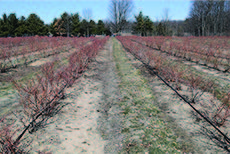
Ideally, begin preparing the soil for planting at least one year prior, including leveling and killing weeds or other undesirable plants that would interfere with optimum growth. Also, begin acidifying the soil using sulfur to a pH of 4.5 to 5.2. If possible, it could be beneficial to establish a stand of turf (e.g., orchard grass or tall fescue) between the targeted rows, as well as building organic matter in the 3″ – 4″ wide targeted planting rows. Establish drip irrigation, and if water pH is higher than 5.5, it would be advised to include an acid injector. Broadcast 2 – 5 gallons of ReStore 3G to aid with soil restoration and nutrient efficiency. Begin building soil nutrient levels based on a soil analysis.
If growing young plants in containers or nursery beds for future transplanting into fields, apply:
- 1 fluid ounce MetaboliK Seed Boost
- 1 tablespoon SiGuard
- 2 tablespoons 10-45-10 per 1,000 square feet
Repeat 90 days later for a total of two applications per year. Every 30 days, foliar apply a solution of two tablespoons 20-5-15 Blueberry Special, 1/2 fluid ounce Metabolik HV-1, and 3 fluid ounces BioTerra Green per 1,000 square feet.
NEW PLANTINGS:
Transplant Solution
Per 100 gallons of transplant solution:
- 25 pounds 10-45-10
- 32 fluid ounces MetaboliK SB (Seed Boost)
- 24 fluid ounces PhytoGro Xtra
ESTABLISHED FIELDS
Carbon/Humates
Use of carbon products (humates) is becoming more commonplace in blueberry production. PhytoGro Xtra is an excellent choice for carbon. Apply up to 5 gallons per acre based on individual practices. This may be split into multiple applications and applied either as a broadcast spray, foliar applied, or injected into either drip or overhead irrigation.
BioStimulants
Mist or band spray over the rows:
- 12 fluid ounces MetaboliK HV-1 in early spring at greenup
- Another 12 – 16 fluid ounces post-harvest
HV-1 may be tank-mixed with pesticide applications. If growing blueberries in higher pH soil, you may have to deal with iron chlorosis (yellowing of vegetative parts).
FOLIAR APPLICATIONS
Foliar applications can vary based on individual grower needs or environmental challenges. The overall goal with foliar nutrients is not to provide the primary source of nutrient uptake but rather to supplement a good fertilizer program. Individual challenges may be fruit set and/or retention, a need to harvest firmer fruit (variety selection is important in this area), or to maintain more consistent fruit size. There is evidence that firmer fruit is less attractive to SWD. Below is a list of potential foliar applications and explanations of why they might be incorporated into your operation.
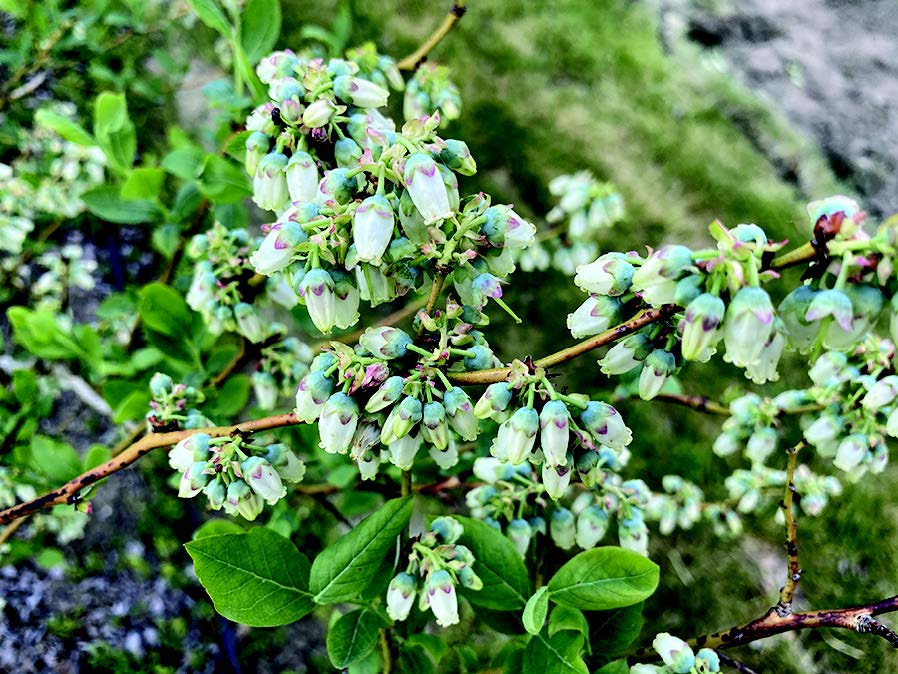
Early Bud Swell:
Goal: Enhance overall plant energy to encourage aggressive development of the fruiting buds. Increasing mineral levels in the plant sap will provide a small amount (perhaps 4 – 5 degrees) of protection against mid and late spring frosts. This foliar may be applied with other crop protection chemicals.
- 10 – 15 pounds/acre 10-20-20
- 16 fluid ounces MagnaBor
- 2 fluid ounces MetaboliK HV-1
- 1/4 pound SiGuard
Post Pollination:
The goal is to control young fruit abortion.
- 10 – 15 pounds per acre 10-20-20
- 2 fluid ounces MetaboliK HV-1
- 1 gallon BioTerra Green
Aphid, Thrip or Mite Control:
If trying to grow blueberries with few or no chemical crop protection sprays, ISP natural plant oils (product is dreggo) has shown good protection for small sucking or piercing insects. Maximum plant coverage is important, as it’s mode of operation is to basically suffocate the pests by covering their breathing apparatus with oils. SiGuard has also shown to be very effective for aphids, mites, thrips, and white flies.
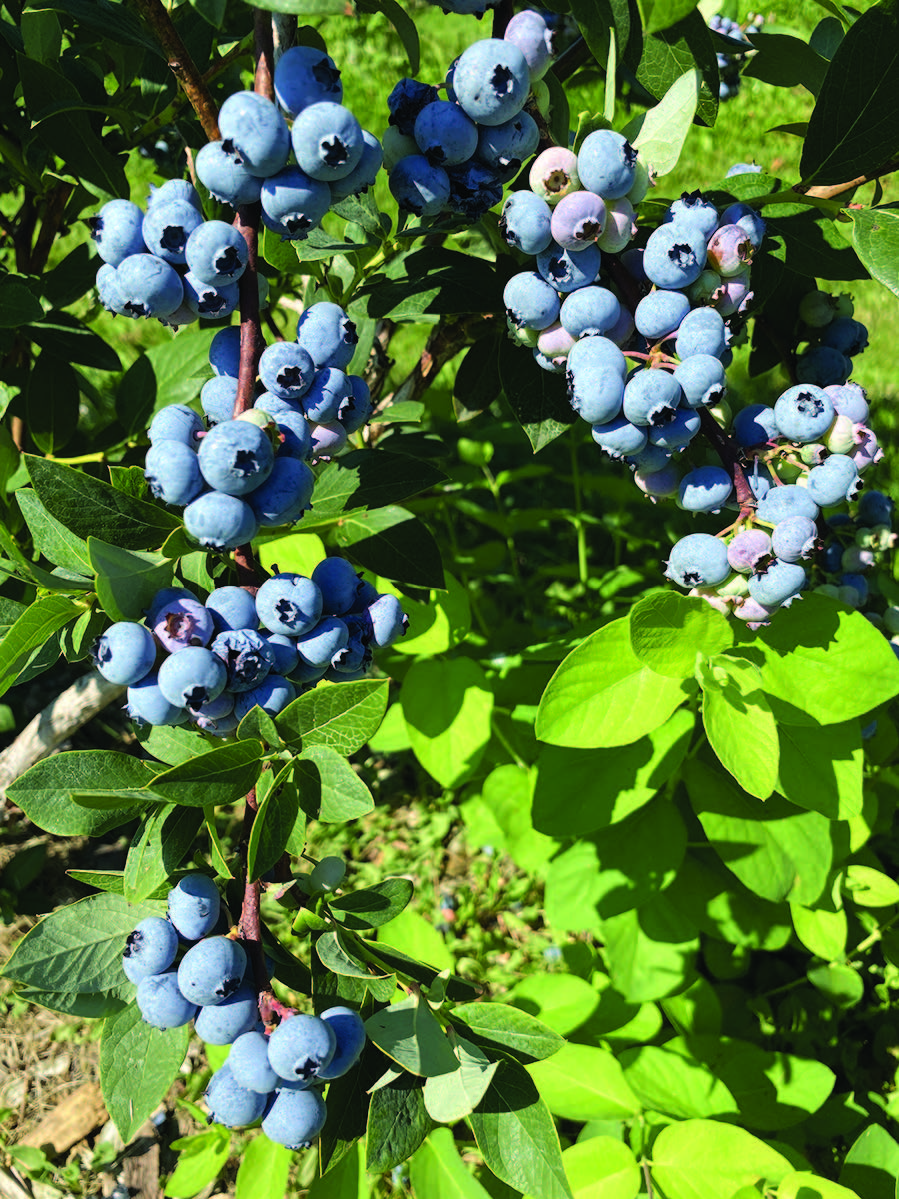
Fruit Maturation:
- 10 pounds per acre of 4-18-38, and 4 fluid ounces MetaboliK HV-1, and 6-8 ounces SiGuard (targeting 2 pounds per acre for the total season).
Repeat with each SWD application, or every two weeks. This will aid in more uniform ripening, fruit size, firmness, and improved flavor. Every second application add 1 gallon BioTerra Green.
If micronutrients are showing to be deficient, MicroZorb may replace the MetaboliK HV-1 in fruit maturation applications. Apply from 16-32 fluid ounces per acre.
Both MicroZorb and MetaboliK HV-1 contain biostimulants that have shown to aid in controlling both abiotic and biotic stress factors.
Fruit Firmness:
With labor becoming more of an issue, machine picking is becoming more common. As such, firmer fruit is a very desirable goal. ISP CalStore (10% liquid calcium) has shown good benefits in providing firm fruit when added to the foliar applications. Target application would be 1 gallon per acre, split into at least four applications, beginning when fruit is 50% sized.
Post Harvest:
Apply 8-12 fluid ounces MetaboliK HV-1, and 10 pounds 10-20-20.
Other Notes:
Silicate (ISP SiGuard) has shown to be of benefit in helping to reduce some diseases such as powdery mildew, as well as reduce plant susceptibility to aphid, mite, and thrip damage. As mentioned, plant coverage is important for maximum protection. The target amount to be applied for the season is 2-2.5 pounds. At least half of this should be applied through either drip or above-ground irrigation.
Pruning/Mechanical Harvest Damage:
Plant damage from pruning or mechanical pickers may result in open wounds. This can be an issue at times if environmental conditions are conducive to plant disease. Application of CalStore at a rate of 32 ounces per acre can be of benefit in helping the plant seal these wounds, thus preventing infection.
Potential for Cold/Frost Protection:
Early season damage due to cold temperatures can be reduced to some degree. The reason is that distilled water freezes quicker than hard water; or in other words, the higher the mineral content of the water, the lower the temperature required for freezing. When looking at plants, we are concerned predominantly with the ratio of nitrogen and water content compared to the mineral content of the sap. The more we can increase the mineral content, the more protection we can achieve. ISP products that have shown to aid with this effort include 4-18-38, 0-36-30, SiGuard, and several others. The amount of protection is usually limited to perhaps 5 degrees, and these materials should be applied within 24 hours of the expected frost. If temperatures are forecasted to be 10 degrees below freezing, then expected benefits are diminished.Title
Documents